Lately I’ve been hearing more and more about purposeful movement breaks initiated by the students: kids acknowledging how they feel, stepping out for a minute, and coming back more focused than before. My kindergarten class has a version of this too, and I love it. No drama, no “you’re in trouble,” just: your body needs to move, go do what you need and come back.
That really got me thinking about the small ways we can bring movement into the school day, but not the big “everyone stand up and do a dance” kind of thing (even though I love those), but the personal, slightly sneaky ones. The ones that don’t derail the lesson, don’t require ten minutes of prep, but still help kids reset their brains and bodies.
Here are a few ideas:
The Hallway Bike
Picture this: just outside the classroom door, there’s a small exercise bike tucked against the wall. Nothing fancy. No screen. No program. Just pedals.
When students feel fidgety, frustrated, sleepy, or overwhelmed that if they’re feeling, they can quietly grab the hall pass (or whatever system you use), step outside, and pedal for a couple of minutes.
Before implementing this (and any other stations) in your classroom, make sure that you first imagine how you want it to look, discuss it with your stuednts, ask them to help you set expectations, and practice it! When students help create the rules, they’re much more likely to respect them. You might want to discuss: Why might someone want to use the bike? How long is fair? What does “quietly leaving” look like? What happens if two people want it at once?
Movement Cards in the Hallway: A Menu of Little Breaks
Picture this: a little strip of laminated movement cards posted at kid height. Each card has a short, simple exercise on it, like:
- 10 wall push-ups
- 20 jumping jacks
- walk to the end of the hallway and back
- 5 deep breaths with arms reaching up and down
- jump on one leg for 30 seconds each side
- stretch to touch the floor, then the ceiling, 10 times
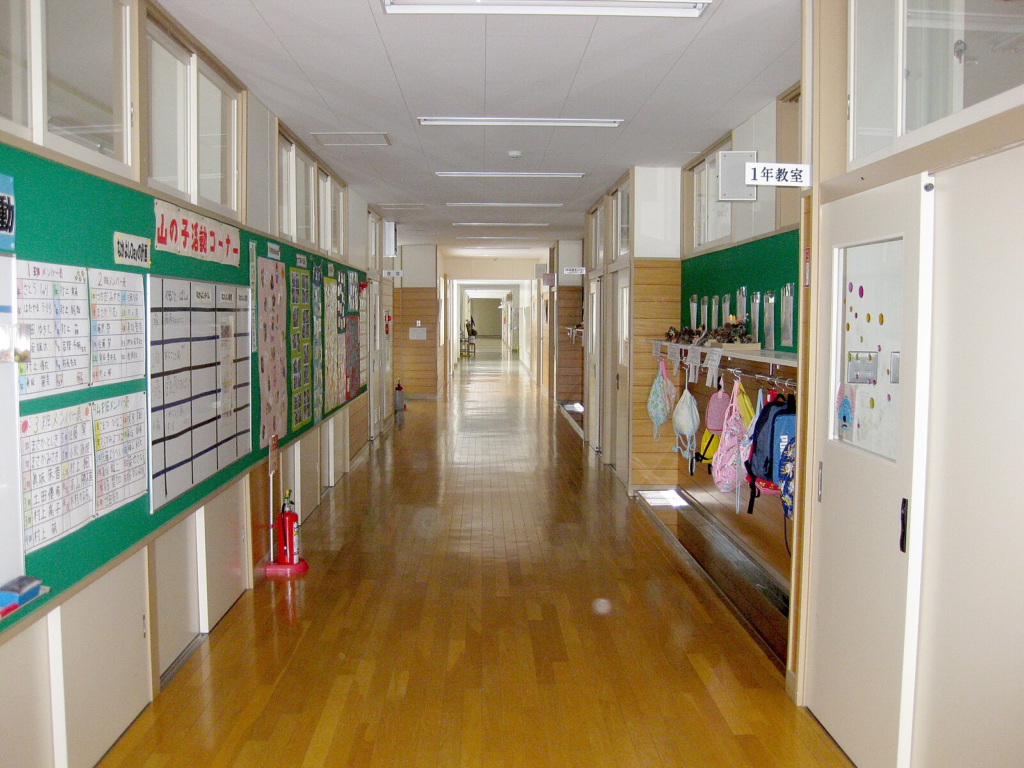
In a lot of the classrooms I’ve seen (and in my kindergarten class), the movement options are set up in the hallway, not inside the room. And I think it’s important, because unfocused students can step out, move, and reset, while students who are on task don’t get distracted watching someone else do jumping jacks next to their desk.
Standing Work Stations
Picture this: this one can be in the back or side of your classroom, one or two high desks where students can stand to work for a few minutes instead of sitting. This can help kids who just need to get out of their chair but still stay on task.
Pssst: I am currently writing this blog post from my standing desk, and I don’t know what I’d do without it.
Hallway Path
Picture this: a strip of tape on the floor outside your door, maybe a hopscotch grid, a balance line, or a zig-zag. When students need a break, they step into the hallway and follow the little “path” once as their movement break. They can walk it, jump along it, walk backwards, or even crab walk, and then they head right back to class. Want to get seriously creative? Read <a href="http://<p><a href="https://www.edutopia.org/article/hop-skip-and-jump">https://www.edutopia.org/article/hop-skip-and-jump</a>
this article by Edutopia and make it a sensory path!
