A mix of a Few

For my last blog post on the subject of movement in the classroom,
I’ve decided to focus on 3 shorts subjects.

1. A Morning Shakeoff
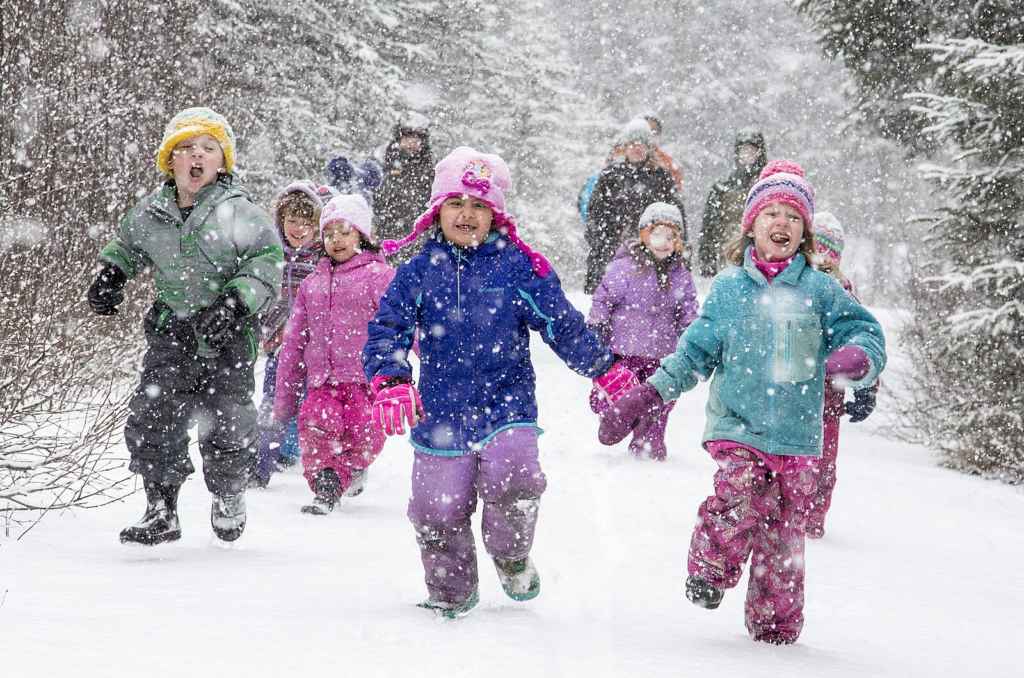
My Kindergarten mentor teacher has a routine I absolutely love. Before students get in the school when the ring bells, she comes outside and goes on a little “run” with them in the school yard to shakeoff before they start their day: they walk, jump, run, tiptoe, skip, whatever the teacher calls out. And of course, she does it with them.

And honestly, it responds to a very real problem: How many students wake up late, finish breakfast in the car or at school, and start their day by sitting down in a classroom? Too many. For those kids, this little routine acts like a reset button, allows them to move, and helps them have a better day at school.

    2. Thekettlebellclassroom
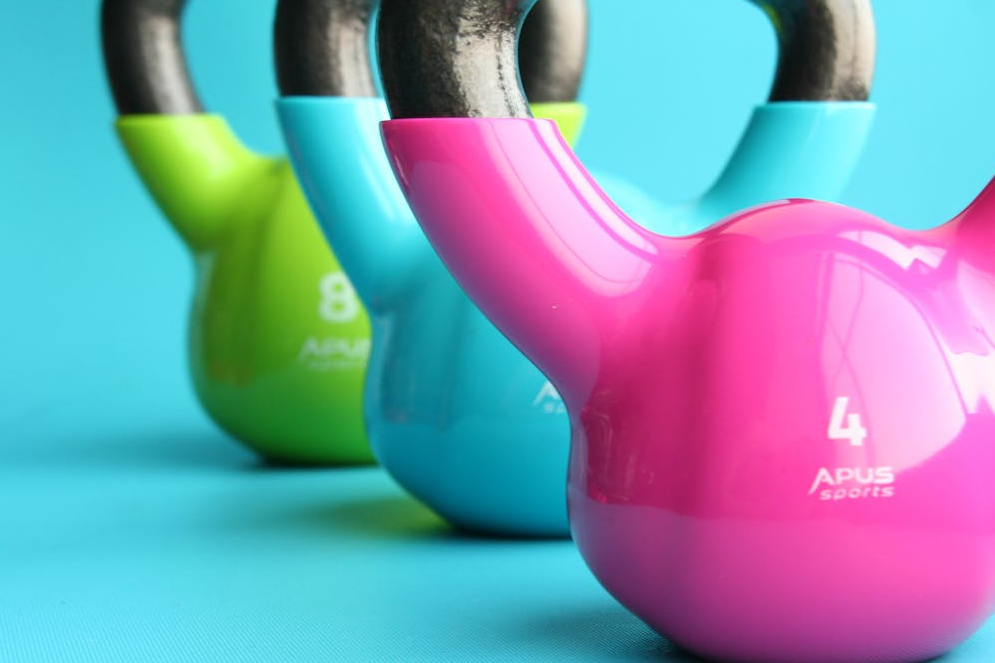
    I also wanted for this last blog post to highlight @thekettlebellclassroom on Instagram, a teacher who literally does workouts with her students.

    She focuses on strength, resilience, and motivation. She pushes students to challenge themselves safely and she celebrates their effort. Watching her students do kettlebell swings, snatches, hang cleans and push through tough intervals makes me think about what’s possible when movement isn’t just “P.E. time,” but part of classroom culture. The focus isn’t only on getting tired and letting the sillys out; it’s on building confidence, perseverance, and the feeling of “I can do hard things.” For some students, your expectations of them will become their expectations of themselves. If you believe they can do it, they are much more likely to believe it too.

    Accounts like TheKettlebellClassroom remind me that school movement can be strong, joyful, and structured all at once, and that kids are often capable of much more than we think when they feel supported, safe, and encouraged.

    3. For Representation

    A last tool I’ve been exploring is the Movement Activity Cards from Healthy Schools BC’s Learning in Motion project. They’re simple, printable cards with so many movement ideas teachers can use. Activities range from balance practice, beanbag games, desk activities, jumping or ladder exercises, math-based movements, planks, sequences, strength work, table tops, and throw-and-catch games.
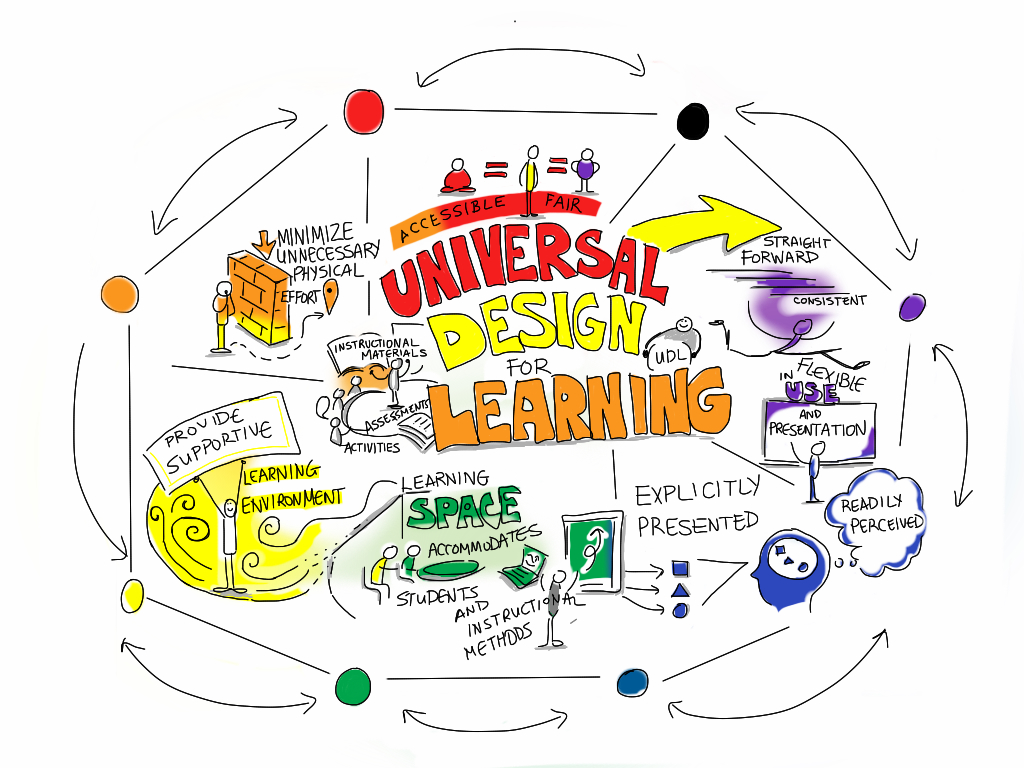
    What I also love is how easily they fit inside a UDL (Universal Design for Learning) mindset; some students need different means of representation, and those cards offer the option. The different options also give students choices: they can decide which activity to do as a brain break, or which exercise to try in the hallway when they feel they need a moment to reset.

    The cards also include creative ideas that work even when P.E. is cancelled or you’re stuck inside. One of my favourite examples is the plank hockey game (p. 40 of the Movement Activity Cards): a playful way to turn a core-strength exercise into something social and fun. Although students often benefit from moving, we all know they sometimes resist the idea if it’s suggested by a teacher or EA. However, instead of “Hold a plank for 30 seconds,” these activities turn movement into a game that’s much harder to resist!

    That’s it, I hope you enjoyed my blog!

    Bye!

    Rosalie 🙂
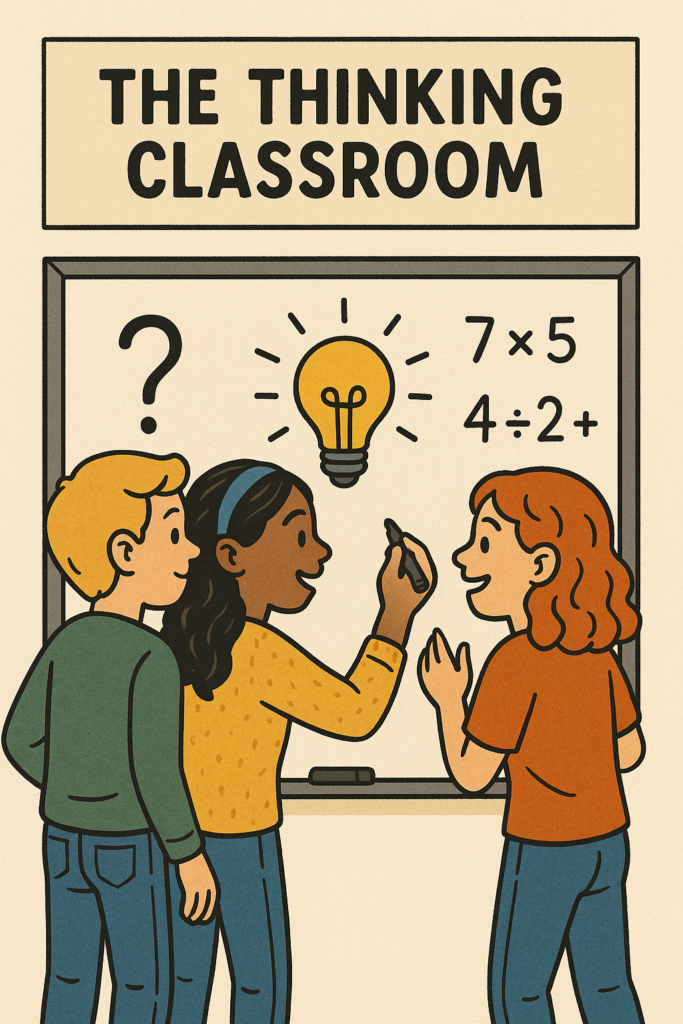
    The Thinking Classroom that Doesn’t Sit

    We’ve discussed ways to involve movement in numeracy and literacy classes, but I missed a big one. Or should I say I didn’t know about it then. But right now, it is the most captivating concept ever created by humankind to me.

    I was recently getting my daily dose of the Cult of Pedagogy and listened to the most interesting episode (206): The Thinking Classroom: An Interview with Peter Liljedahl (click here for the blog post). Although you won’t see students jump up and down with this approach, it does get them up and about. It breaks sedentary habits and has huge benefits. The idea was researched (for 15 years!) and tested with more than 400 teachers, and was initially offered to math teachers.

    Photo by ChatGPT

    In short, the technique can be summarized as less teaching, no mimicking, and more thinking. Students work in groups of three, standing, writing on a whiteboard, with one marker per team. To get to where he did with this new approach, Peter Liljedahl questioned every institutional norm possible. He even had a classroom operate without furniture for a few weeks to research the impact of furniture… and he did that with everything. His approach is, in many ways, bulletproof.

    The 14 Building Thinking Classrooms Practices are:

    1. What Types of Tasks We Use
    2. How We Form Collaborative Groups
    3. Where Students Work
    4. How We Arrange the Furniture
    5. How We Answer Questions
    6. When, Where and How Tasks Are Given
    7. What Homework Looks Like
    8. How We Foster Student Autonomy
    9. How We Use Hints and Extensions
    10. How We Consolidate a Lesson
    11. How Students Take Notes
    12. What We Choose to Evaluate
    13. How We Use Formative Assessment
    14. How We Grade

    I just bought his book and it has been captivating. He goes in depth about just about everything. See it in action here. No one sitting on a chair. No. One.

    Look, I have never been a math teacher, but it sounds amazing, and of course this technique can always be implemented alongside something else – whatever you feel your classroom needs. At its core, it works against “learned helplessness.” All the time, students are being told what to do, when to do it, and how to do it, with very little room for thinking, making mistakes, or figuring things out. Sure, some students will take that space, whether it comes naturally to them or because their parents encourage it at home. But most students won’t, and in a traditional classroom, an overwhelming majority won’t try to figure it out when it gets hard by trying, making mistakes, and trying again; they will just wait and see, or ask.

    So this post is a little off topic, but also not, because students are standing up and writing, a strategy that, by the way, helps tremendously with thinking, engagement, and participation. And if the whole idea is not for you, that’s okay. It’s still a reminder that it can be easy to implement some kind of movement in your classroom that doesn’t need much space or have students sweating. If the Thinking Classroom method isn’t for you, perhaps try just having students work standing up when they are in a group!

    Hope that helps!

    Empower Students to Acknowledge when they Need a Break

    Photo by Douglas Perkins under the Creative Commons Attribution 3.0 Unported license.

    Lately I’ve been hearing more and more about purposeful movement breaks initiated by the students: kids acknowledging how they feel, stepping out for a minute, and coming back more focused than before. My kindergarten class has a version of this too, and I love it. No drama, no “you’re in trouble,” just: your body needs to move, go do what you need and come back.

    That really got me thinking about the small ways we can bring movement into the school day, but not the big “everyone stand up and do a dance” kind of thing (even though I love those), but the personal, slightly sneaky ones. The ones that don’t derail the lesson, don’t require ten minutes of prep, but still help kids reset their brains and bodies.

    Here are a few ideas:

    The Hallway Bike

    Picture this: just outside the classroom door, there’s a small exercise bike tucked against the wall. Nothing fancy. No screen. No program. Just pedals.

    When students feel fidgety, frustrated, sleepy, or overwhelmed that if they’re feeling, they can quietly grab the hall pass (or whatever system you use), step outside, and pedal for a couple of minutes.

    Before implementing this (and any other stations) in your classroom, make sure that you first imagine how you want it to look, discuss it with your stuednts, ask them to help you set expectations, and practice it! When students help create the rules, they’re much more likely to respect them. You might want to discuss: Why might someone want to use the bike? How long is fair? What does “quietly leaving” look like? What happens if two people want it at once?

    Movement Cards in the Hallway: A Menu of Little Breaks

    Picture this: a little strip of laminated movement cards posted at kid height. Each card has a short, simple exercise on it, like:

    • 10 wall push-ups
    • 20 jumping jacks
    • walk to the end of the hallway and back
    • 5 deep breaths with arms reaching up and down
    • jump on one leg for 30 seconds each side
    • stretch to touch the floor, then the ceiling, 10 times

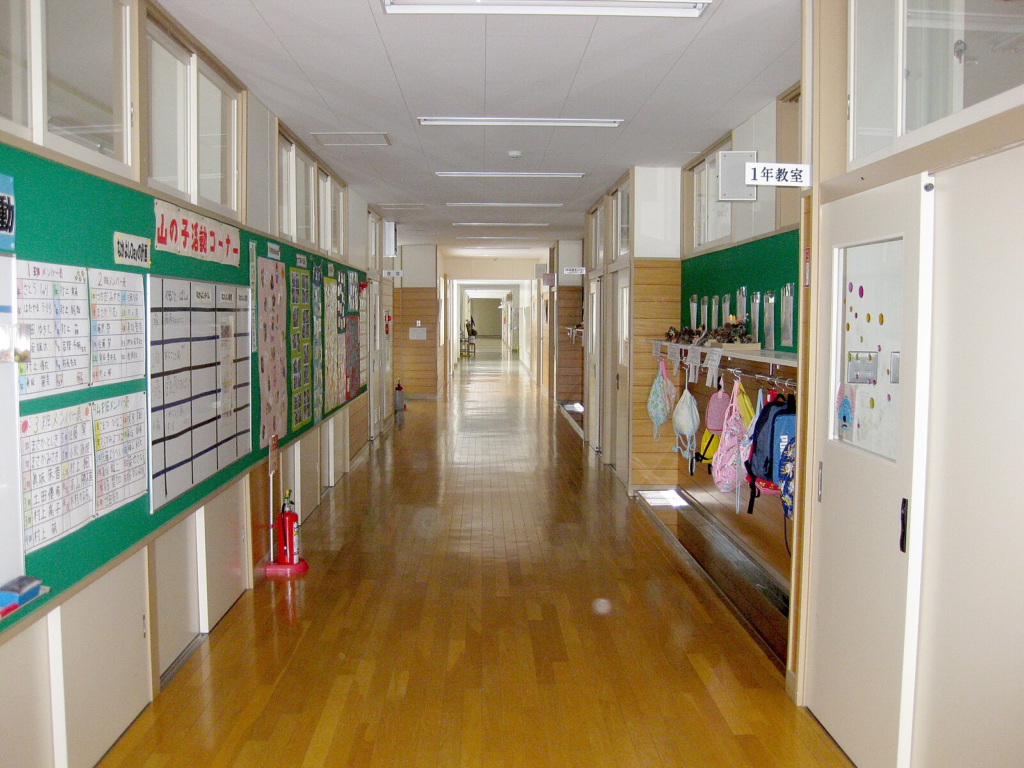
    In a lot of the classrooms I’ve seen (and in my kindergarten class), the movement options are set up in the hallway, not inside the room. And I think it’s important, because unfocused students can step out, move, and reset, while students who are on task don’t get distracted watching someone else do jumping jacks next to their desk.

    Standing Work Stations

    Picture this: this one can be in the back or side of your classroom, one or two high desks where students can stand to work for a few minutes instead of sitting. This can help kids who just need to get out of their chair but still stay on task.

    Pssst: I am currently writing this blog post from my standing desk, and I don’t know what I’d do without it.

    Hallway Path

    Picture this: a strip of tape on the floor outside your door, maybe a hopscotch grid, a balance line, or a zig-zag. When students need a break, they step into the hallway and follow the little “path” once as their movement break. They can walk it, jump along it, walk backwards, or even crab walk, and then they head right back to class. Want to get seriously creative? Read <a href="http://<p><a href="https://www.edutopia.org/article/hop-skip-and-jump">https://www.edutopia.org/article/hop-skip-and-jump</a>

    this article by Edutopia and make it a sensory path!

    Make it Stick!

    For this blog post, I wanted to talk about an episode from what I call my personal Bible: the Cult of Pedagogy podcast. I was listening to it in my car on the way home from school (never enough talk about education!). I love Jennifer Gonzalez and I’m currently making my way through her 263 episodes (as I’m writing this). She has experience in the classroom, and she also brings on guests to discuss a wide range of topics.

    In one of her episodes from 2019, called “To Boost Learning, Just Add Movement,” she talks about the benefits of adding movement in the classroom not just for physical or mental health, but also to improve learning. This episode made me realize I had to write a post about the Accelerated Integrated Method (AIM). But I’m diverting from the episode. In it, she states that “the use of gestures results in more enduring learning than learning without gestures.”

    She also shares six ways to incorporate movement in the classroom that can improve students’ performance and help them understand and retain new vocabulary or concepts. I personally prefer listening to the episode because I can easily fit it into my driving time, but Jennifer also has a blog, and I believe there is a corresponding post for each episode. A bonus of the blog post is that she links a (or many) videos demonstrating each strategy. This is especially helpful for people who understand better when they can see someone doing it (and not because they’re so-called “visual learners”; she actually starts the episode and blog post by pointing out that learning styles have been labeled a myth for a few years now)!

    She explains:

    1. Virtual and Augmented Reality
    2. Total Physical Response
    3. Tableau/Snapshot
    4. Simulations
    5. Songs with Movement
    6. Brain Breaks (which have been discussed in this blog as well)

    Have fun, and I hope my bible become yours too, if it wasn’t already!

    Movement-Based Numeracy Activities

    Photo by Tara Winstead
    Photo by Tara Winstead

    This week, I focused on math. So many people’s worst nightmare… but here are a few ways to make it fun and active!

    1. Snowball Fight

    I got this idea from Move Mountains in Kindergarten. Get your students in line and give each one a piece of paper with a number written on it. You can use single numbers (1, 2, 3, etc.) or skip counting (5, 10, 15, etc.).

    Students squish their paper into a “snowball” and throw it. Then, on your signal, they tippy-toe to pick up a snowball, but not their own. Encourage them to move in a different direction instead of just in front of them. Once everyone has chosen a snowball, have them unwrap it and, working as a team, line up in ascending order.

    TIP: Beforehand, demonstrate how to tiptoe and review what voice level is expected. Activities like this can get students so excited that they may want to shout.

    2. Back N’ Forth

    This next idea is inspired from Just Teachy. The original version uses a small “mat” and one die indoors. To win, 2 students “race” to the opposite end of the ladder by rolling a dice and moving accordingly to the number they get. For a more active twist, take it outside and have pairs draw their own ladder with chalk. With older students, I would suggest using two dice to practice addition or multiplication.

    To add another twist and to avoid having to create an extra long ladder, if you’re practicing multiplication, count each jump as 2 and have students freeze if they roll an odd number! Encourage students to help each other when multiplication gets tricky.

    There are so many variations to this game, you can easily make it your own.

    @justteachy

    Back & Forth is an easy and fun game to practice numeracy. Two players take turns rolling the die and moving the playing piece back & forth on the game board until one player reaches their “Finish” space! Once students know how to play this game, it’s an easy one to put in a Math center, or use for inside recess. 😃 You can easily make this game biard yourself, but if you’d like a printable version of this game, it is available along with my other Dice Games on TpT. #kindergartenmath #kindergartenteacher #mathcenter #handsonlearning #makelearningfun

    ♬ original sound – Just Teachy

    3. What’s My Number

    This last one is a fun, interactive way to review math concepts, and it’s easy to adapt. For younger students, you could for example focus on “greater than” or “smaller than.”

    For older students, expand into reviewing or practicing place value, equations, or other math concepts.

    The possibilities are endless, and you can adjust it to fit almost any unit.

    Movement-Based Literacy Activities

    Chris Jobling, CC BY-SA 2.0, via Wikimedia Commons

    This week, I researched different ways to incorporate movement into literacy learning with lower elementary students, and honestly, it made me wish I could go back to elementary school… or at least fast-forward to when I get to teach it myself!

    1. Literacy Hopscotch

    On a sunny day, draw hopscotchs with some chalk and add letters, sounds, or words in each tile. Take your students outside, group them and have them hop and read! If it’s raining, print the words on paper and lay them out on the floor in hopscotch format. Rotate groups so everyone practices all the target sounds or words. If hopping is tricky for some students, they can walk instead. For students with movement disabilities, print the words on paper and have them toss a beanbag or soft object onto a word. Ask a partner to then hold it up for them to read. A straight-line hopscotch is also easier to navigate, like in the video below:

    2. Segmenting Words with Jumps

    Practicing CVC or multisyllabic words? Use a syllable mat like in the video below. Students jump on each syllable while saying it aloud. You can have everyone do it at once or rotate in groups, up to you! You don’t even need a proper mat; hula hoops, laminated cards, anything works. And for students who struggle to jump, they can clap or stomp instead.

    @poppingintokinder

    Adding movement can make an activity so much more engaging! 🚥 I decided to spice up our phonemic awareness time by having students jump to segment words. To make these, I just cut up a few Twister mats! Super easy and SO FUN!!! #phonemicawareness #segmentingsounds #cvcwords #kindergartenphonics #kindergartenactivities #handsonlearning #engaginglittles #kindergartenteacher #iteachk

    ♬ original sound – Ashley | Popping Into Kinder

    While exploring ideas, I found The Active Educator, who suggests an even more dynamic alternative with extra movement. This is perfect if your class has lots of energy or if you want a “finisher” activity to give them a mini workout. Just make sure all students can safely complete the exercises.

    Voir cette publication sur Instagram

    Une publication partagĂŠe par Andriana | Classroom Community (@the_active_educator)

    She also created an Ultimate List of Engaging, Movement-Based Games for Phonics Learning, which includes even more incredible literacy-movement activities. Definitely worth a read!

    3. Musical Chairs (or Tables!), Literacy Edition

    Split your class, play music, and have students walk around chairs or tables. When the music stops, each student reads the word in front of them, either on the chair they sit on or the paper in front of them on the table, and then shows it to their group so everyone can try reading it or at least see it.

    To avoid everyone shouting the word at once, write tiny numbers next to each word so students know who reads first, second, third, etc. And important note: no one gets eliminated!

    You can even practice some kind sentences prior. For example: “Good job for trying ______! I think it’s pronounced _______. Want to try again?” Or if there’s disagreement: “If we’re not sure, let’s ask the teacher!”

    Active Brain-Breaks!

    Photo by Niklas Jeromin

    It’s hard to deny the evidence for the importance of physical activity in the classroom (See blog post Why Move in the Classroom?,) and just as hard to find a strong reason not to include it. The most common excuse is probably, “I don’t have time to find activities that involve movement.” I don’t take no for an answer, so here’s a starting point: three effective, active, and quick brain breaks/transitions that you can easily integrate into your classroom

    1. Dance It Out!

    Remember Just Dance? It was fun, sweaty, and felt like a party. In 2025, we’re bringing it back with DJ Raphi. Have your students move along to fun pop songs (always a hit), let out a smile or giggle, and of course, get their heart rate up. And remember: a higher heart rate means all those great brain-boosting effects kick in.

    2. At your Desk Workout

    @thesimpleot

    Hi 👋 I’m a pediatric occupational therapist and I teach people about the brain and body! Specifically how to help with regulation and keeping attention and engagement throughout the day! Incorporating sensory breaks with motor movement activities (particularly heavy work) helps students regulate their energy levels, improve focus, and manage stress. 🧠Heavy work activities like pushing, pulling, or carrying weighted objects provide deep proprioceptive input that can have a calming effect, supporting self-regulation and increasing attention. These breaks help students release: ✨excess energy ✨mprove body awareness ✨enhance classroom performance ✨ultimately fostering a positive learning environment Try incorporating this sensory circuit in the morning before school drop off, during the day, or at night before dinner. ✅ Follow for more sensory circuit ideas 💡 #sensory #break #move #ot #school #kid #learn #teach #attention

    ♬ original sound – Hillel Barak

    We all know technology can fail. One day your interactive screen might not work, no problem! You can lead this one yourself. Guide your students through a quick, at-your-desk workout that won’t bore them: quick feet (chair stomps), chair push-ups, water bottle pick-ups, book lifts, play-doh rolls, over-the-chair squats, arm circles, seated twists, seated leg extensions, desk drumming. The possibilities are endless, just remember to adapt activities to your students and keep them inclusive and accessible!

    3. Breathe In, Breathe Out

    “I want them to move, but I can’t have them bouncing off the walls after this!” In that case, Salamander Yoga may be the solution. It makes yoga fun, helps students stretch, and most importantly, calms them down while still keeping them physically active.

    There you go: three easy brain breaks for your classroom that will keep students entertained, moving, and mentally ready to learn.

    Lander, N. J., Contardo Ayala, A. M., Mazzoli, E., Lai, S. K., Orr, J., & Salmon, J. (2024). Beyond “brain breaks”: A new model for integrating classroom-based active breaks. Journal of Physical Education, Recreation & Dance, 95(4), 22–30. https://doi.org/10.1080/07303084.2024.2308253

    Why Move in the Classroom?

    Have you ever heard someone say “physical activity is bad for you”? I’ll take a guess: no.

    It is widely accepted that physical activity is paramount for improving both physical and mental health. Moving makes your heart beat faster, which means your cardiovascular functions are strengthening and your circulation is improving. Oxygen reaches key areas of the brain more efficiently, and your body releases “feel-good” chemicals such as endorphins. As a result, you feel less stressed, happier, and maybe even more confident! Being active will help students focus and get the work done, counterbalance fatigue, improve awareness of physical and emotional sensations, diminish behavioral problems, and specifically help your students who have ADHD (Braniff, 2011). Physical activity also helps counterbalance the negative effects of sedentary behaviour. (Lander et al., 2024)

    Sadly, more than 80% of youth fail to meet the recommended 60 minutes of moderate-to-vigorous physical activity per day. (Lander et al., 2024)

    In recent years, research has also further highlighted how closely physical activity and learning are interconnected. All the health benefits mentioned above are not the only positives of bringing movement into the classroom. Incorporating physical activity into learning can directly support academic performance.

    “Physical activity has been positively associated with increased academic-related outcomes, including cognitive skills (e.g., executive functioning, attention, memory, comprehension), attitudes toward learning (e.g., motivation, self-concept, satisfaction, enjoyment), engagement in learning (e.g., on-task time), and academic achievement (e.g., standardized test scores).”

    (Lander et al., 2024)

    “Girls who get involved in school sports are 92% less likely to use drugs; they are 80% less likely to have an unwanted pregnancy; and their high-school graduation rate is triple that of non-athletes. The importance of school sports is underscored when you consider the fact that girls who do not participate by age ten have only a 10% chance of actively participating in a sport by age twenty-five.”

    (Jensen, 2000)

    Still not sure whether you should involve movement in your classroom? Stop fooling yourself and read this blog post again! Being active will keep your students healthy, both mentally and physically.

    Braniff, Carrie Jean (2011) “The Effects of Movement in the Classroom,” Networks: An Online Journal for Teacher Research: Vol. 13: Iss. 1. https://doi.org/10.4148/2470-6353.1089

    Lander, N. J., Contardo Ayala, A. M., Mazzoli, E., Lai, S. K., Orr, J., & Salmon, J. (2024). Beyond “brain breaks”: A new model for integrating classroom-based active breaks. Journal of Physical Education, Recreation & Dance, 95(4), 22–30. https://doi.org/10.1080/07303084.2024.2308253

    Learning Through Moving your Brains and Bodies

    For this semester’s blog, I will be focusing on two of my greatest passions: education and being active. What I love about teaching in the elementary classroom is the chance to be creative; kids learn better when they’re playing, moving, and having fun.

    To prepare myself (and maybe even other soon-to-be teachers), I will be building a “catalogue” of active routines, learning activities, and brain breaks that will get students moving their bodies as well as their minds. I want to find ways to involve physical activity in as many ways as possible in the classroom; through literacy, maths, instruction, brain breaks, and more.

    Alongside the practical ideas, and to add credibility and stress on the topic, I will also explore the science behind it: How does physical activity affect students? How does it help with memory, focus, and emotions?

    As I put this together, I’ll be asking myself: Can every student take part? Do I need modifications? How do I make sure no one feels left out?