EdCamp – After Thoughts

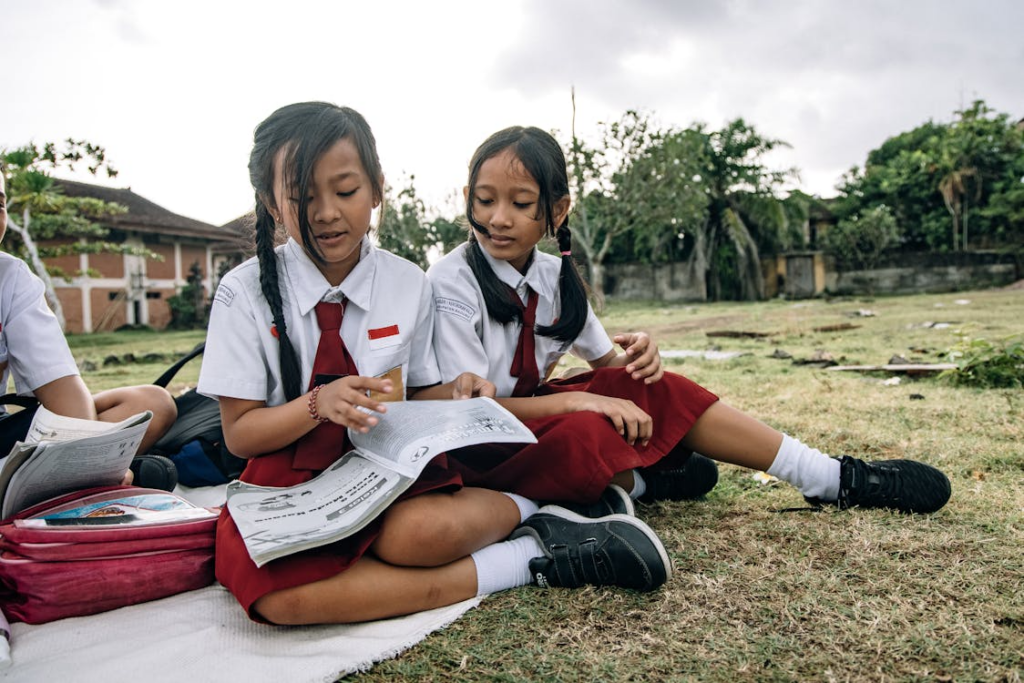
Photo by Roman Odintsov

I really appreciated the EdCamp class today. In small groups, we discussed different subjects related to education. There were a few conversation options to join; if I recall correctly, there was EdTech and Phys Ed, outdoor education, the place of cellphones in schools, and two others.

I chose to discuss nature-based education, and we had great conversations. We talked about how more and more schools are integrating outdoor classrooms and how important and beneficial this can be. A simple change of environment, as well as breathing fresh air and getting some movement, can have a big impact on students’ motivation, focus, and interest.

There are so many interesting activities that can be done outside, from simple day-to-day tasks like correcting work or completing worksheets, to lessons focused on ecosystems, nature, and the environment.

There are also some challenges to take into consideration:

  • Some schools might not have outdoor space available, especially if other classes are already outside.
  • Some schools might be in busy areas where going outside could be counterproductive. If honks, sirens, and traffic are right next to the school, the noise might overstimulate students and pull them away from the main objective: learning.
  • Some schools might have strict restrictions about bringing students outside, especially if the school is in a dangerous area, or if some students are at risk of running away (lived experience!).
  • For language arts teachers/music/PE teachers (any teachers who only see elementary students occasionally), the transition of going outside on a whim, especially with younger students, might take up too much of the short amount of time they have with their class.
  • For out-of-school activities, even something as simple as walking to a park, teacher-student ratios might prevent classes from leaving, especially in younger grades where the required ratio is lower.

But in general, we strongly agreed that nature should be included in school as much as possible!
Cari Wilson – After Thoughts

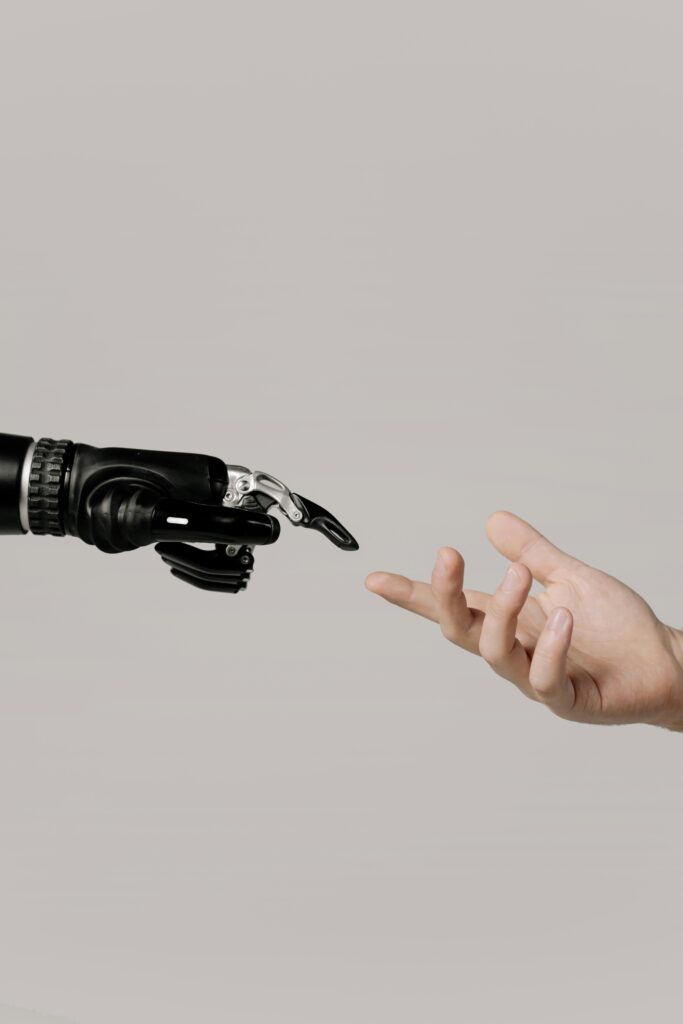
I truly appreciated Cari Wilson’s visit in our class; she was factual and able to give arguments both for and against the use of AI in classrooms. I really enjoyed the ethical dilemma conversation, because it pushes you to think about real issues that, as teachers, we’ll have to discuss with colleagues, students, parents, and ourselves!

This class was more than two weeks ago (we’ve been busy!), and here are the conversations that really stuck with me:

Use of AI with elementary and middle school students

I shared in class that I have a pretty strong stance on using AI in elementary and middle school. As an adult who uses AI, I’m extremely aware of its potential cognitive dangers. The only thing that seems to keep me ā€œsafeā€ is the fact that I spent 14 years in school without it. I learned how to develop patience, critical thinking, creativity, and, most importantly, how to write. I couldn’t just ask ChatGPT to correct my mistakes. I had to understand what my mistakes were.

Students will use AI at home, with their friends, and in their free time; to me, school is where they should balance that out. Honestly, even after this class, my opinion on that didn’t really change. However, I really appreciated how Cari highlighted the importance of AI education. That part I completely agree with. It’s important to make sure students know AI’s limits, its environmental impacts, the existence of deep fakes, and how to use AI appropriately; something we’re all still slowly figuring out.

Homework

Kind of unrelated to AI, but it came up in our conversation and I really liked it. Cari also talked about how much homework students get and how she tries to make hers relational and applicable. She tries to have students spend that time helping their parents at home or having conversations with them, and then she translates those experiences into pedagogical learning. It’s a concept I definitely want to research more in depth, because I found it really interesting.

Guidelines

She also emphasized how important it is to know the guidelines for AI use in our school district. I don’t have much more to say about that, but it’s something that’s really important to keep in mind.

Using AI as a teacher

The other big conversation we had, the one that raised concern in some, excitement in others, and a mix of everything in most, was about teachers using AI. Again, even though AI has existed for years, the AI we know now and its possibilities are relatively new, and especially, constantly growing. It’s really hard to have a firm opinion on how much teachers should use it. I talked with a teacher who said it feels like cheating. I get that. But I also feel that, even though the endless tools, apps, and websites are extremely overwhelming, AI has the potential to make teaching so much better: more adaptable, more creative, more interactive.

I can hardly imagine having time to think through all the adaptations a ā€œperfectā€ classroom would have, on top of teaching students and having a life; family, partner, friends, going to the gym, being outside, going on weekend getaways, and watching a TV show at night. You see where I’m going with this: having a balanced life. I see AI as something that could help teachers be the teacher they want to be, in the classroom they want, while still having that balance.

The thing is, some extremely brilliant people are going to have to figure out how to make all this happen without destroying the environment… or maybe today’s kids will have to find a way. I thought the little boy’s idea of having the AI computer in a bubble in the ocean was so adorable, and honestly, kind of brilliant (maybe?).

Jesse Miller Key Speaker – After Thoughts

A photo of me reading a book yesterday.

What a great speaker Jesse Miller was! The class was not only really interesting, but also super applicable to teachers. A few things he said really stuck with me; here are a few, although I definitely forgot many more:

  • I really appreciated how he discussed people’s responses to things that happen online (and honestly, in life). He pointed out how often, instead of actually helping, people further victimize the victim. Sad, but true. And I feel like we’ve all been that person at some point. It’s a good reminder to be careful about such behaviours.
  • I also liked how he talked about going back to the ā€œwhyā€. Why someone started doing something before the ā€œhateā€ showed up. Back to what made them happy, and reflecting on how that affects their self-esteem.
  • Something that terrified me from the start is how realistic AI videos can be. I’ve thought a lot about the dangers of AI in terms of laziness, environment, and long-term employment, but I hadn’t considered how scary it is that we might not be able to tell what’s real anymore. And that matters for, like he said, young girls comparing themselves to someone, a someone who might not even exist.
  • Another thought-provoking point, and it really was relatable for me, was that for some people (teachers, or principals specifically), high school feels like the safest place in the world, so their decisions are shaped by that belief. I relate, because I naturally think the same about elementary/middle schools, where I aim to work, which gives me a bit of a blind spot to the tough reality that schools and classrooms aren’t always safe. Honestly, I wouldn’t have even thought about keeping phones in class for the purpose of calling for help or recording inappropriate behavior.
  • Another line that stuck with me: ā€œWe don’t learn when we are going through a crisis,ā€ referring to taking a teen’s phone away. I asked what he’d do instead, and he mentioned using phone breaks and promising them after a set amount of time if everyone stays off their phones; leaning on accountability, which is so much more valuable to teach than punishment.
  • His talk also gave me the idea that when I have my own classroom, I’ll ask parents if there are reasons their child should have a phone at school. I think this is especially useful in middle school, but it’s worth considering at every age.

In short, Jesse was incredibly insightful and knowledgeable, and I really appreciated him coming into our class and shining a light on these topics.

Oh and that photo of me from earlier? That person does not exist.

Multi-Access/Hybrid Learning – After Thoughts

I found the class really interesting, but it left me a little tangled in my own thoughts. I like taking a critical perspective on what I hear instead of jumping into the ā€œthis sounds perfectā€ mentality. I’m trying to get ready to be a teacher, so think about everything in a concrete “how will I do that in my classroom?” manner, staying realistic. The conversation I’m referring to was about multi-access/hybrid teaching in classrooms. I wanted to ask my teacher at the end whether the discussion was focused on elementary teaching or more upper levels, like college or university, but after two hours in front of my computer, I decided to log off!

I always appreciate Valerie’s compassionate and considerate perspectives, which come not only from her personal and professional values but also from experience with her own kids. She brings up dimensions I don’t naturally think about. As an able-bodied young woman who’s never faced significant physical or mental health struggles, I tend to forget about other people’s realities. And that’s where my dilemma comes in.

Growing up, I watched my mom teach grade 1, raise two kids, exercise, assist to ALL my brother and I’s sports games, go on weekend trips, see friends, cook us breakfast, lunch, and dinner (with my dad of course… this is 2025!), and SO much more. I respect her even more now that I’ve had my own classroom, because I’ve seen firsthand how demanding teaching is. Teachers have so much on their plates and so many students to support… and just so much time.

In a perfect world, all teachers would adapt lessons to every student, teach through multiple approaches, encourage students to express themselves in different ways, match each student’s exact level, include some free inquiry projects, be culturally responsive, act as counselors, and, on top of that, make their classrooms accessible both in-person and online. But I really struggle to see how that can all be possible, while having kids, friends, a partner, and a family, as well as a physical and mental health to take care of. I want to be the best teacher I can be, and expect working countless after hours, I’ve seen and experienced it firsthand, but refuse to forget myself in the process. Therefore, sometimes, I find myself conflicted with the idea of specialized schools (or classrooms) for students who need more support, whether that’s for mental health or physical disabilities. On the one hand, they offer smaller class sizes, more resources, and teachers with specific training. These schools can give students the attention they need, reduce the stress and workload on teachers, and provide environments that are better adapted to particular needs. I feel like, for some students, being in a space where their differences aren’t what make them stand out can build confidence and make learning more manageable? Families may also feel more supported, knowing their child is in an environment tailored to them.

On the other hand, I also see how these schools can risk deepening the gap, and sometimes leave students feeling more ā€œset apart.ā€

So I guess I’m just a little overwhelmed with all of these expectations piled onto a job that is already so demanding. I have scheduled a meeting with my teacher, and look forward to having her valuable input on those thoughts.

Pacific School of Technology and Innovation – After Thoughts

Photo by Lum3n: https://www.pexels.com/photo/close-up-of-hand-holding-pencil-over-white-background-316466/

Photo by Lum3n

Visiting the Pacific School of Technology and Innovation was eye-opening, and also definitely confusing. I had, and still have, so many questions. After watching Most Likely to Succeed, I was fascinated by the concept, and I honestly thought it was one of the best ideas I had ever heard. I still think it is extremely innovative, inclusive, and interesting, but once the initial excitement settled, I decided to look at it more critically through my own lens as a future teacher, and according to my own personal believes, personality, and experiences.

For me, the big question is about balance. YES, students should be creative, think critically, follow their passions, work hard and learn to be autonomous. I love that this model seems to support all of that. But I also believe that school isn’t only about following our interests. Sometimes it means learning things even when we don’t naturally care about them. You might love space more than anything, but that doesn’t mean you shouldn’t learn about Canadian history. In fact, I think being exposed to a variety of subjects when you’re young is what helps you discover unexpected interests. Maybe you thought history was boring until one day you realize it’s actually not. Regardless, it’s important. I also believe that learning how to be bored or unmotivated and still follow through is an important life skill. I don’t think the Pacific School of Technology and Innovation model is for everyone. If I take myself as an example, I don’t think I would have had a strong enough passion at that age to research one topic all day, every day. Not all kids have a ā€œthingā€ yet, and honestly, some people might never have one big passion, and that’s okay too.

Another downside in my opinion that I noticed, from my short observation, I noticed that most students were on their computers. Personally, that is not how I would want my students learning most of the time. I would definitely need to observe again before forming a strong opinion.

Despite my critics, I absolutely loved the idea of adapting learning to student interests, but, as I aim to work in public schools, I also question how realistic it is to expect one teacher to individualize everything for 30 students. That said, I am fully on board with pieces of it. I love the idea of genius hour. I also really like the idea of project-based learning where students still learn certain subjects but get to demonstrate their understanding in their own way, similar to what we saw in Most Likely to Succeed.

So overall, I am inspired but cautious. I do not want to romanticize something just because it feels progressive. I want to find a way to take the parts that, as of right now, I believe truly work and apply them in a classroom setting that feels balanced and realistic.

Most Likely to Suceed – After Thoughts

After watching the documentary Most Likely to Succeed, I found the concept fascinating and thought-provoking. The opening scene, where students sat in a circle struggling to share ideas, opinions, or reflections, felt like a very powerful representation of our generation. Looking at some of those students also even felt like looking at a mirror. It highlighted how traditional schooling often prevents students from practicing their decision-making skills and critical thinking. Too often, education is structured around black-and-white answers, leaving little room for freedom, creativity, or personal opinions.

This great documentary captured both the challenges and the potential of giving students freedom and autonomy. The striking growth shown by some of the students was spectacular. Although it was difficult to clearly see the traditional academic development they achieved, or whether the prerequisites for university were fully met for all, the film strongly portrayed the development of important soft skills in many of them. Watching students evolve from shy and hesitant to outgoing and well-spoken made it emotional to vicariously witness their growth.

It was also extremely relevant that the documentary highlighted statistics about how little students actually remember in traditional schools. Knowledge is often memorized for the exam and forgotten for life. This made the school in the film feel idealistic, eye-opening, and difficult to argue against.

After watching, I was left with the impression that all high schools should provide at least one year of this type of learning.